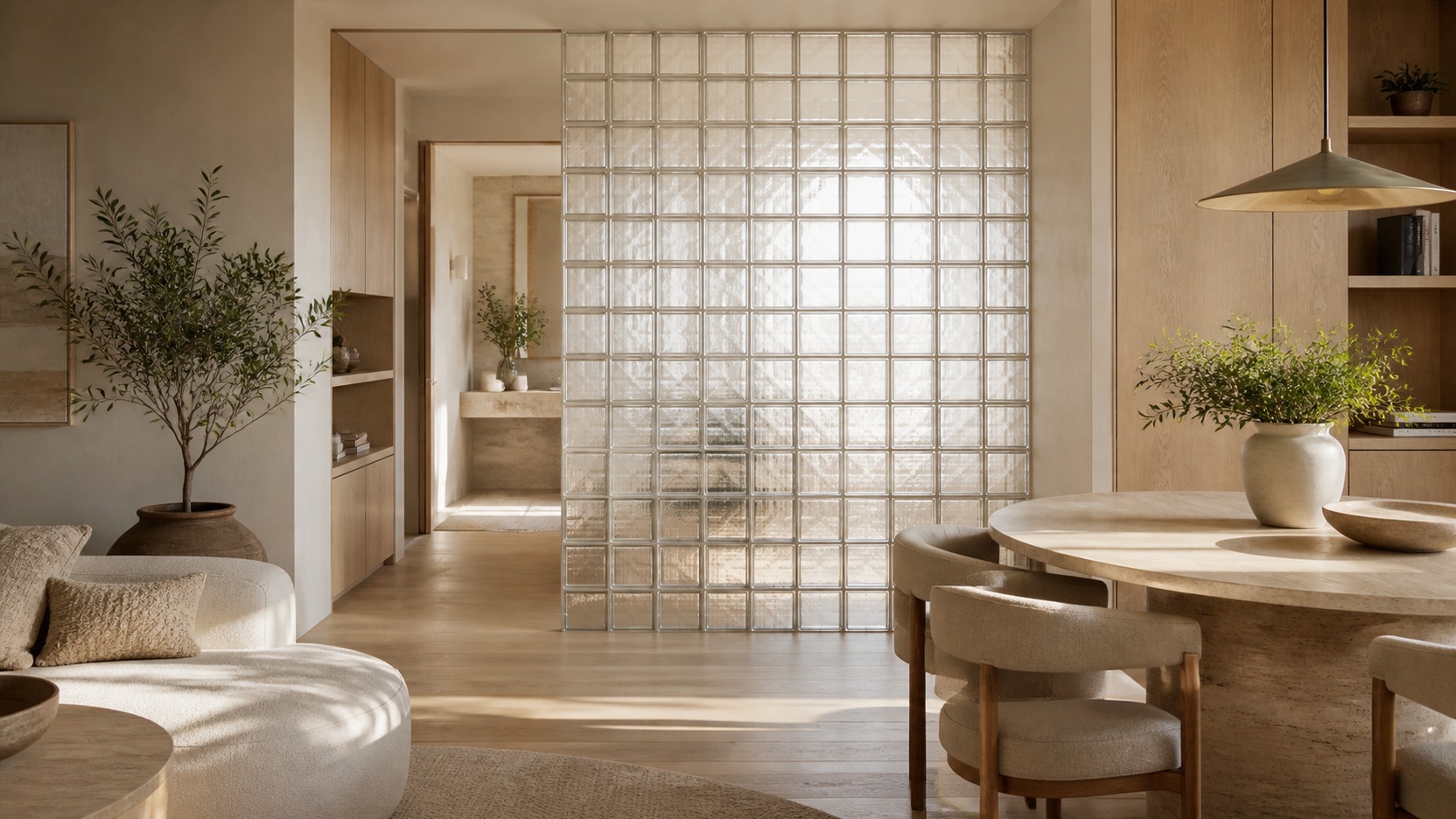
Few home features spark an argument quite like glass blocks. Mention them and someone will picture a foggy ’80s bathroom window or a boxy office lobby. Yet designers keep reaching for them again, and the results look nothing like the dated stuff you remember.
- Glass blocks carry more of a reputation problem than a design flaw, and reframing them changes everything
- They pull double duty as real structure and a soft light source, which almost no other material does
- Scale, contrast, and restraint are what separate a fresh install from a nostalgic one
Why This ’80s Relic Keeps Coming Back
Plenty of design choices get typecast. Wall-to-wall carpet, brown bedroom walls, wood paneling. Glass block sits right in that pile for a lot of people. Designer Rachel Robinson of Dunham Robinson puts it plainly, saying the material suffers from an association problem more than a design problem. It had a very specific moment, used a very specific way, and that heavy repetition left a mark that still reads as dated to some eyes.
Wood paneling is the useful comparison here. After being slapped on every rec room wall through the 1970s and ’80s, it went out of favor for decades. Now it’s back as a warm, considered detail that homeowners actually hunt for. Glass block is walking the same path. Strip away the nostalgia and you’re left with an inventive building material that does things nothing else quite manages. It’s structural. It scatters light beautifully. And it hands you privacy without dimming a room.
Designers Are Putting Them to Work
Designer James Huniford of Huniford Design Studio treats glass bricks as a chance to rethink what a wall can even do. Instead of a plain divider, they bring in light, texture, and a bit of architectural interest all at once. He’s been folding them into projects for years. On a recent West Village home, his team used a glass-block wall to separate a kitchen from the living room. The kitchen had no natural light of its own, so the blocks let brightness filter through while keeping the two spaces connected. It also gave the whole place a moody, lounge-like feeling.
Robinson has leaned on the material for practical wins too. In a Brooklyn brownstone, existing windows sat too close to the property line to legally count as windows. Her fix was fire-rated glass brick that works as a genuine code-compliant wall while still letting daylight pour in. The team loved the look enough to open those spots up even wider. The glass block became a kind of bridge between the home’s historic bones and the contemporary furniture they moved in.
How to Use Them Without Looking Stuck in the Past
Glass blocks are chameleons. Set them against rich woods and dark lacquer and they lean Art Deco. Pair them with earthy terracotta and they echo midcentury warmth. Put them near soft pastels and they read as thoroughly modern. The trick that ties it all together is intention. These are never an afterthought.
A few ground rules help. First, don’t let them compete. Even though the blocks are translucent, they’re still a bold move, so surround them with soft, enveloping tones rather than loud colors or busy patterns. Second, play with scale. Skip the standard square wavy module everyone pictures and try large formats, odd proportions, or a textured finish so the wall feels deliberate. Third, build in some contrast if you want a current look. A dark lacquer finish, a saturated primary color, or a gentle pastel next to the block creates tension, and that tension is what makes it feel fresh.
The biggest shift is thinking of glass brick as architecture instead of decor. The more it works as a true wall, partition, or light well, the less it registers as a nostalgic gimmick. Getting that balance right is worth a professional eye, the same way a big purchase sends you to a trusted specialist. Buyers researching a new SUV lean on a Mazda dealer Troy shoppers rely on for that kind of guidance, and a good designer plays the same role when you’re deciding where a glass-block wall belongs.
Give These Light-Catchers a Second Look
If you inherited a glass-block wall in a new place, don’t rush to tear it out. And if you’re building from scratch, it’s worth a spot on your idea board. Used with a little restraint and treated as a real structural element, these bricks do something genuinely hard to copy. They carry light deep into dark rooms, screen a space without closing it off, and bend to almost any style you throw at them. The feature that once dated a house is now the detail that gives it character.
