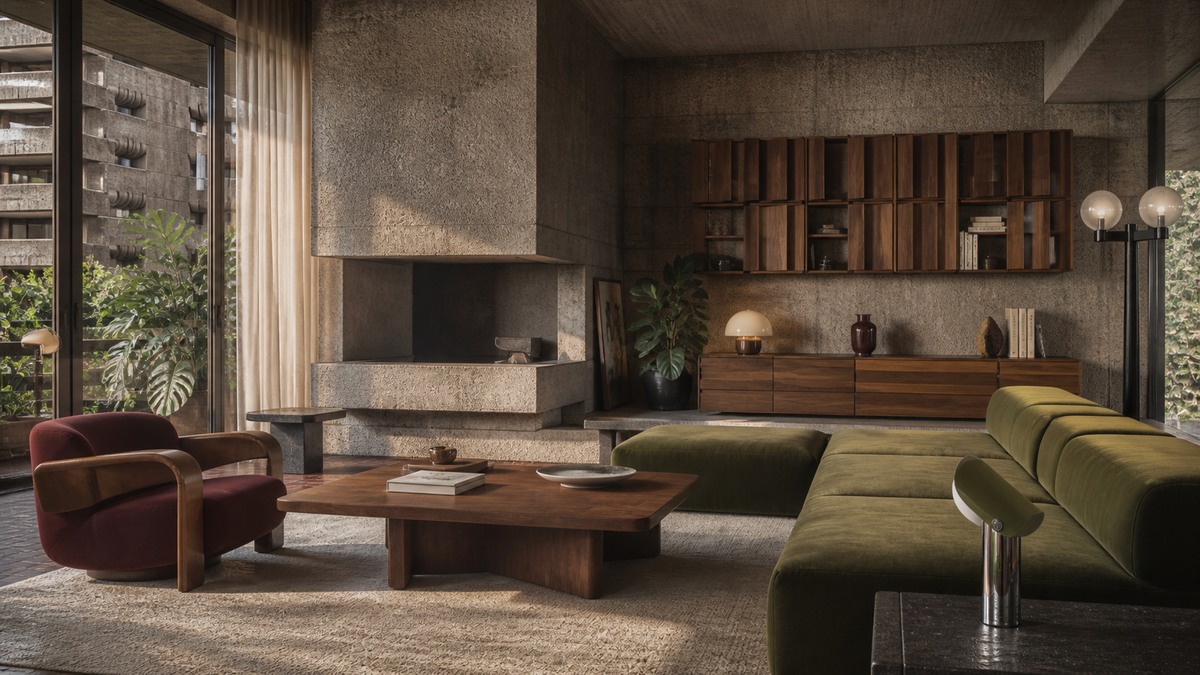
The Barbican has always been a place people either adore or squint at, its raw concrete walls and looping walkways splitting opinion for decades. Now the London landmark’s bold look is stepping off the estate and into everyday homes, with a fresh furniture and lighting collection that borrows the building’s shapes and softens them for real living rooms.
- A 23-piece range from Made and the Barbican draws on the estate’s concert halls, walkways, and original apartments.
- Signature details like semi-circle curves and waffle ceilings show up in chairs, tables, and lamps.
- Prices start at £32, with the collection landing at Made.com from August 2026.
From a Bomb Site to a Design Icon
The Barbican rose in 1982 on the largest Second World War bomb site in the City of London. Architects Chamberlin, Powell and Bon planned it as a mix of culture and housing, a place where concert halls, galleries, and homes could share the same textured concrete skin. That skin took real effort to make. The pick-hammered finish alone was part of a build that ran nearly 17 years from start to finish.
Today the estate is a magnet for fans of arts and architecture, with its fountain court, roomy foyers, and those famous raised walkways. The new collection lets people take a small piece of that world home, and it does so without turning the pieces into museum props. They’re meant to be used.
Where the Shapes Come From
The design team at Made spent time in the Barbican’s archives, and they went deeper than the public spaces. They studied the work of Miriam Howitt, the designer asked to create five show homes for the development in the late 1960s. Howitt drew on her travels to Scandinavia and on bold Dutch interiors, and her choices shaped the whole project. Her fingerprints run through the range, from the color palette to the confidence of the patterns.
One motif keeps returning across the estate: the semi-circle, often flipped upside down. You’ll spot it in the podium window sills, the penthouse roofs, the fountains, the stair towers, and even the curved plan of the Frobisher Crescent building at the heart of the complex. That curve became a design language, and the collection speaks it fluently.
The Pieces That Made the Cut
The curves show up first in the ‘Dual’ accent chairs, whose wooden side panels echo the estate’s concrete pillars. The ‘Plinth’ coffee table nods to the sunken seating pods beside the Barbican lake, while the ‘Curve’ lamp series takes its cue from the tubular acoustic panels inside the Concert Hall. Each piece carries a clear reference, but none of them feel like a costume.
Then there are the waffle ceilings. Those heavy coffered grids were a clever way to save concrete while creating a strong repeating pattern across indoor and outdoor spaces. Their rounded square shape lives on in the ‘Coffer’ ceiling and wall lights. Fans of brutalist furniture and lighting will find plenty to study here, since the whole point was to keep the architecture legible in every object.
The range rounds out with two sofa designs, a dining table and chairs, and a stained ash sideboard. Warm tones run through the soft furnishings, with moss greens and burgundy hues that mirror Howitt’s original show apartments. Accessories include a graphic cushion showing the Barbican’s ‘boat edge’ balconies and the ‘Brute’ deep-pile rug in ochre with white stripes. As the Made team put it, Howitt used bold color to give visual weight, so big rooms felt grounded rather than empty.
See It Before You Buy It
To mark the launch, Made is building a free immersive installation at the Barbican Centre this September, in partnership with London Design Festival. You’ll find it at the Level G Hub Space, where it opens up the archives and the thinking behind each piece. The timing fits a bigger moment for the estate, too. The Barbican is hunting for a designer to reimagine up to 500 pieces of furniture across its public spaces for its 50th anniversary, an open competition with a high bar to clear. The original furniture there came from Robin Day, so whoever wins has big shoes to fill.
The ‘Made x Barbican’ collection reaches Made.com from August 2026, with selected items also at the Barbican Shop. Prices start at £32, which keeps the entry point friendly for anyone who wants a bit of concrete poetry without the concrete. It’s a smart way to enjoy a divisive style: keep the bold shapes, lose the weight, and let a lamp or a chair carry the story instead of a whole building.
