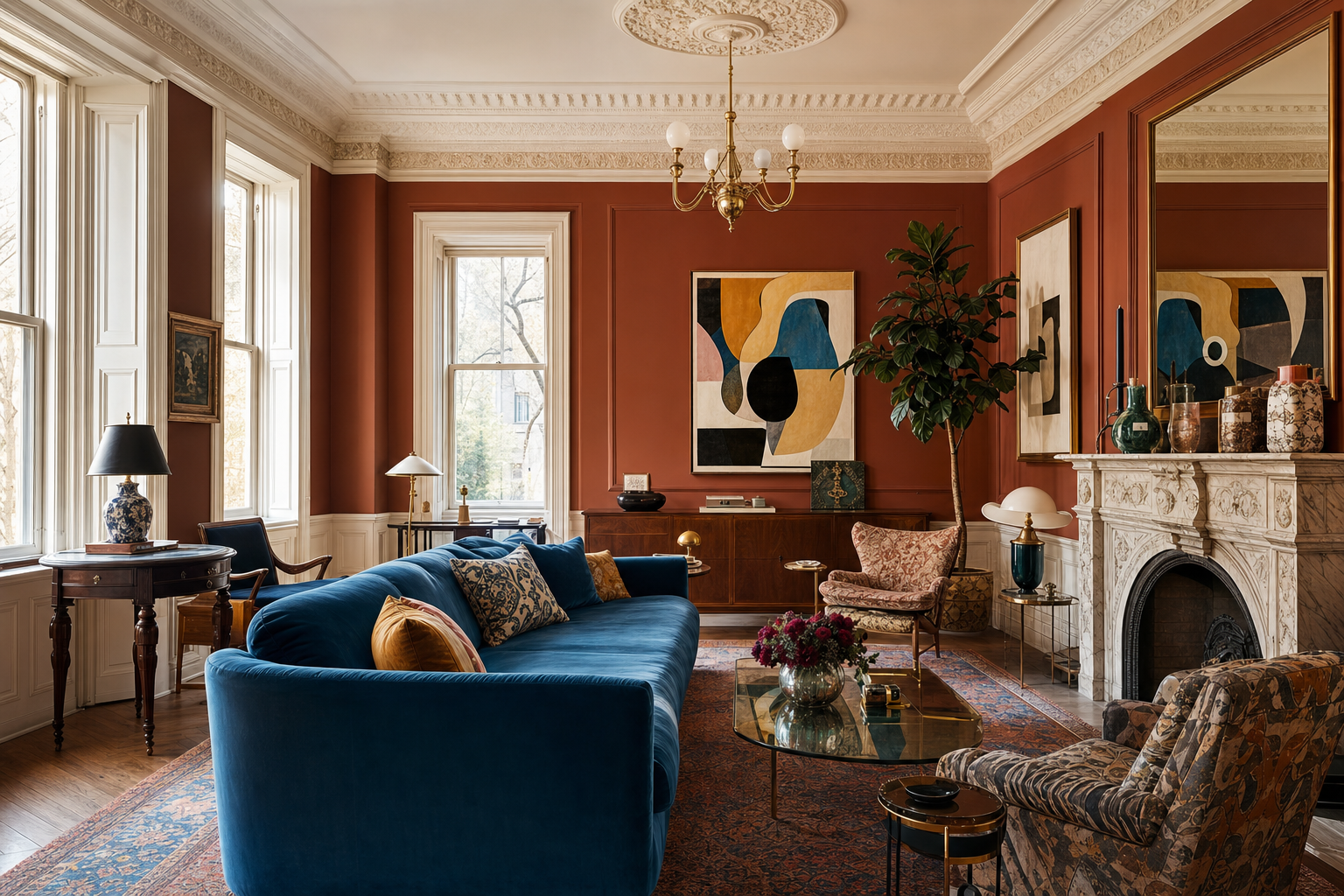
Old houses have been waiting patiently for this moment. After years of white walls, gray floors, and furniture chosen to disappear, a look called Eclectorian is bringing pattern, color, and personality back to period rooms. The idea is simple. Take the architecture a Victorian house already has and stop apologizing for it.
- Eclectorian blends Victorian architecture with maximalist, mix-and-match styling
- The existing millwork and moldings do most of the work, so your money goes toward color and furniture
- One room is enough to test the look before you commit the whole house
What Eclectorian Actually Means
The name is a mashup of eclectic and Victorian, and that’s a fair description of the result. Victorian houses came with a lot of built-in drama. Deep baseboards, picture rails, ceiling medallions, bay windows, carved mantels, transoms above the doors. For a long stretch, the fashionable move was to paint all of it the same shade of white and hope nobody noticed.
Eclectorian does the opposite. It treats those details as the starting point and then piles on furniture, art, and textiles from wildly different decades. A velvet sofa can sit under a bright abstract canvas. A flea market oil portrait can hang beside a lamp somebody’s grandmother would have called ugly. Nothing has to match, and that’s sort of the point.
What keeps Eclectorian style from looking like a junk shop is the Victorian architecture. Symmetrical windows, tall ceilings, and repeating moldings give your eye a grid to rest on. Once that structure is there, you can be a lot braver with everything you put inside it.
Let the Bones Do the Talking
Before you buy anything, walk through the room and take stock of what’s already built in. Original trim, a tiled fireplace surround, a plaster ceiling rose, or a wide staircase newel post are all free assets. Most of them just need attention rather than replacement.
Paint is the fastest way to wake Victorian details up in an Eclectorian room. Instead of the standard white trim with colored walls, try painting the molding a shade or two deeper than the wall, or go the whole way and color drench the room so walls, trim, and ceiling all share one saturated tone. Suddenly the moldings read as sculpture instead of background noise.
If the trim has been painted flat for decades, a satin or semigloss finish will catch the light and pull the profiles forward. Small change, big difference.
Layering Without Creating Chaos
Eclectorian maximalism gets a bad reputation. People hear the word and picture clutter, when the actual skill is committing to what you love and giving it room to be seen. A few habits keep the layers readable.
Pick a loose color thread and repeat it. If there’s an ochre in your rug, echo it in a lampshade, a book spine on the shelf, or a throw pillow across the room. Repetition tricks the eye into reading a busy space as deliberate.
Mix pattern scales rather than pattern styles. A large floral wallpaper gets along fine with a small check upholstery and a wide stripe curtain. Three patterns at the same scale will fight each other.
Vary height and material. Something wooden, something metal, something glass, something soft. Antique furniture reads warmer when there’s a modern piece nearby to push against it, and a modern room feels grounded when one genuinely old object anchors it.
Leave a little breathing space. Even in a full room, one bare wall or one clear tabletop gives everything else somewhere to land.
Where to Start This Weekend
Begin with the room that already has the most character, usually a front parlor, a dining room, or a landing. Paint the trim. Hang the art you’ve been storing in a closet because it didn’t go with anything. Swap one safe lamp for one that makes you laugh a little.
Then live with it for a couple of weeks. Eclectorian rooms tend to build slowly, one estate sale chair and one strange painting at a time, and that’s what keeps them from looking like they arrived in a single delivery truck. The houses that pull this off best are the ones that clearly belong to somebody in particular.
