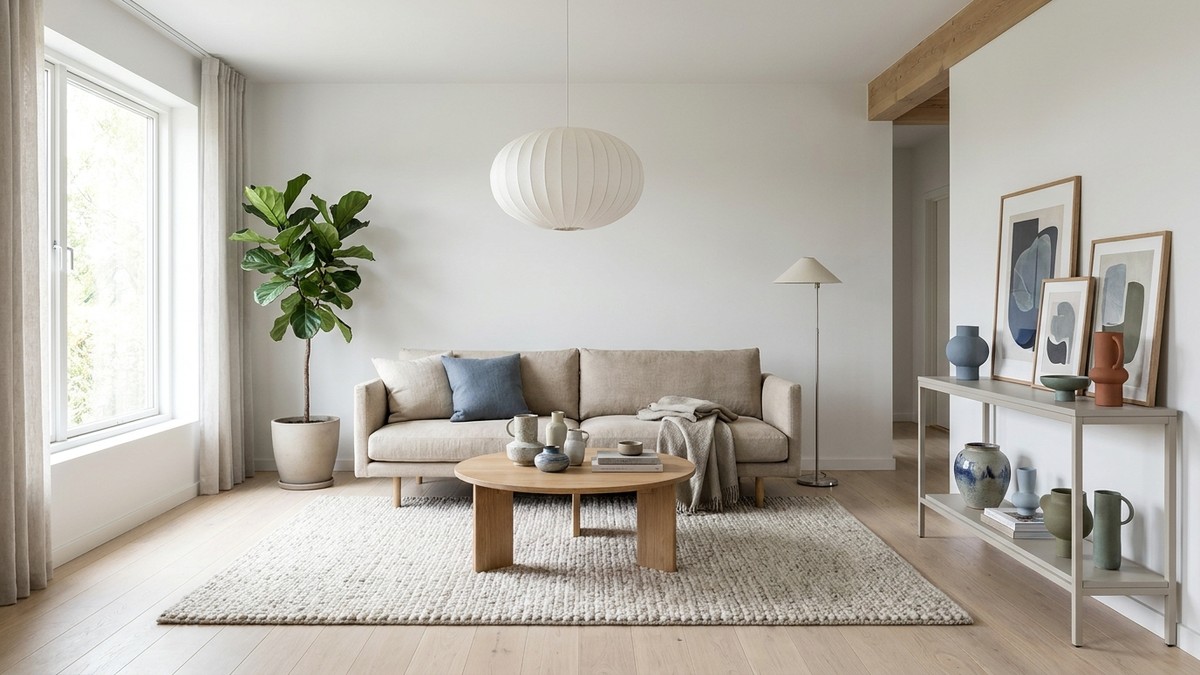
Scandinavian style has a way of feeling effortless, but the latest looks coming out of Stockholm, Copenhagen, and Oslo prove there’s real thought behind that calm. The newest ideas aren’t loud reinventions. They’re small, smart shifts that add warmth, depth, and personality while keeping that signature sense of quiet.
- Layered textures and sculptural shapes are replacing flat, single-material rooms
- Softer stripes, visible craftsmanship, and lived-in vintage pieces feel fresh right now
- Pulling the sofa away from the wall opens up spaces big and small
You’ve probably heard that Scandi design is timeless, and it’s true. That’s exactly why the shifts happening in furniture showrooms and trade fairs are worth paying attention to. Nordic style now has plenty to offer both minimalists and people who love a little more going on, all without losing its cool head. Here are seven ideas worth borrowing.
Build Rooms Around Texture, Not Just Materials
Pale birch, washed oak, smooth stone, and slubby wool have always been the backbone of the Scandi look. The change now is a move toward texture-led rooms instead of purely material-led ones. As interior designer Kashi Shikunova of YAM Studio puts it, the material stays consistent while shifts in texture add depth, shadow, and visual interest. Readers interested in the broader context can also explore design choices that improve how a room feels.
The trick is keeping your palette simple and layering different textures together for richness. Think fluted detailing on cabinet doors, which turns plain wood into a focal point without dragging in a second material. Pair crisp joinery with soft, tactile fabrics like bouclé and linen, and a room instantly feels more welcoming.
Let Sculptural Shapes Do the Talking
From Verner Panton lamps to Hans Wegner chairs, Scandinavian pieces have always leaned a little more toward art than pure function. What’s different now is how they’re used. Curved and angular forms used to be the accent beside boxy, rectangular furniture. Today they’re becoming the default. For authoritative background, Britannica’s overview of Scandinavian design offers useful context.
Nanna Liv, creative director of London studio House 44, says designers are grouping these sculptural pieces together rather than treating them as lone statements. When shapes, materials, and proportions share a visual harmony, a room flows better and feels balanced without any obvious effort.
Soften the Stripe and Show Your Hand
Stripes have long belonged in Nordic interiors. Writer and curator Dorothea Gundtoft points out that the region loves pattern, just with discipline, and nothing is more graphic or orderly than a stripe. The fresh take is all about palette. Upholstery in taupe, faded gray, and muted brown gives even bold, wide stripes a quieter, more livable feel. The calmer approach lets a piece’s shape and materials share the spotlight.
Alongside those softer prints, maker’s marks are having a moment. Kai Pryce, co-founder of Att Pynta, notes that Nordic design still prizes simplicity but now embraces visible craftsmanship, irregular finishes, and natural variation too. Vases handcrafted from steel and wooden stools with joints left purposefully exposed show off that human touch. The result feels more personal, layered, and lived-in.
Put Vintage to Work and Free the Sofa
Scandinavian brands produced some of the most enduring furniture and lighting around, so mixing those classics with contemporary pieces is a natural fit. The smart move isn’t making a vintage find the star of the room. It’s letting it work as a genuine, everyday element. Designer Sophie Pringle of Pringle & Pringle sums it up well: mix periods confidently, but edit carefully. A space that feels lived-in rather than styled reads as complete.
Then there’s the layout shift that costs nothing. In Nordic homes, sofas are drifting out of corners and away from walls. Louise Mengel Læsø, head of design at Wendelbo, calls the sofa being pulled into the room one of the biggest changes right now. You don’t need a huge space to try it. Even in a smaller home, nudging your sofa a few inches off the wall makes the whole layout feel more open and relaxed. Modular designs work especially well here, since they let the sofa define a room rather than hug its edges.
Start Small and Watch the Mood Shift
What ties all seven ideas together is restraint. None of them asks for a full renovation or a bold color you’ll regret. Swap in a textured finish, group a couple of curvy pieces, choose a muted stripe, or simply move your sofa. Each change is subtle on its own, but together they build the kind of calm, collected home that Scandi design does better than anywhere else. Pick one to try this week and let the rest follow.
