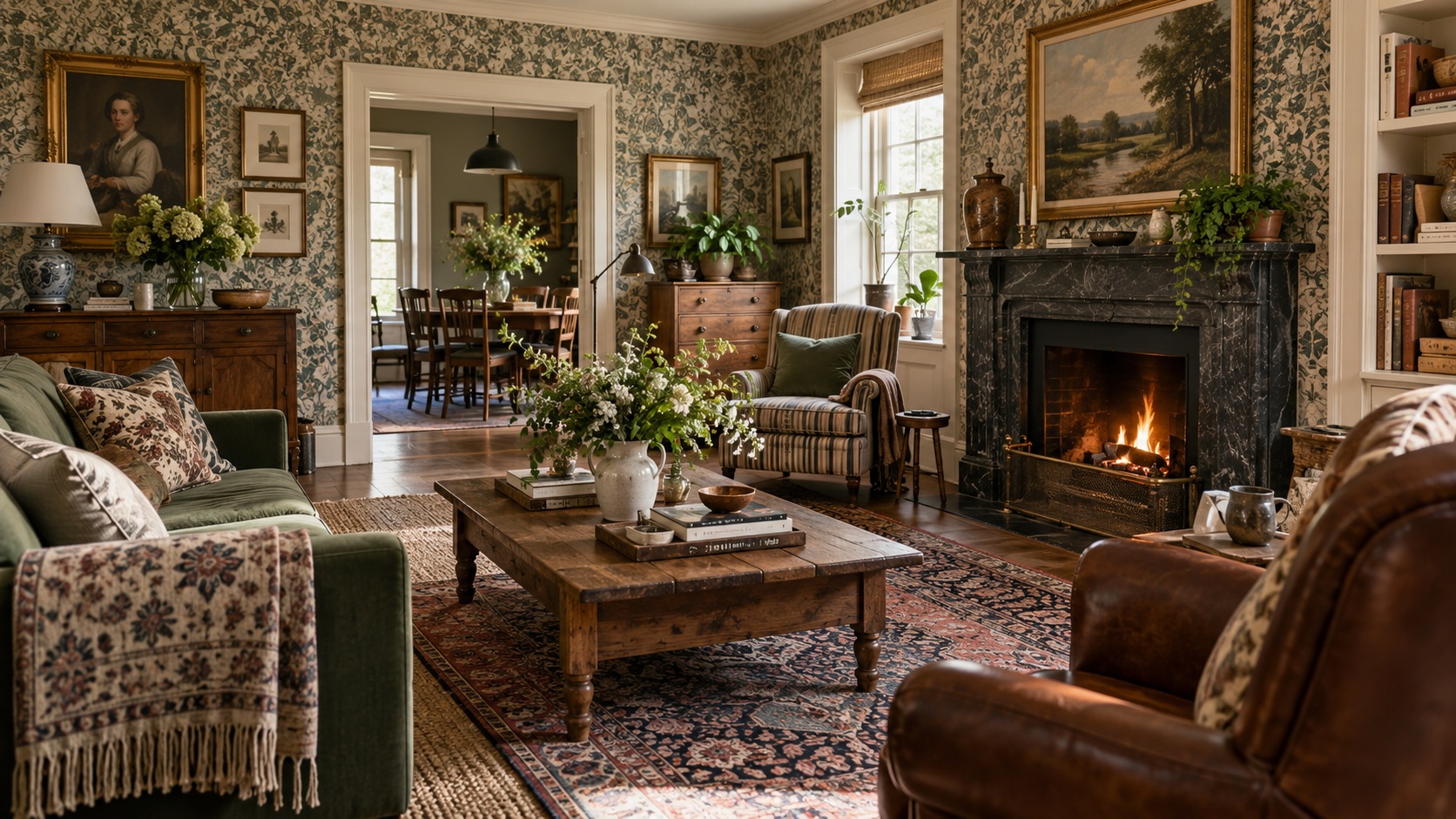
Scroll through home photos long enough and you’ll start seeing double. You’ll find the same millennial gray, the same pared-back minimalism and the same pieces in room after room. Social media gave us endless decorating ideas. It also gave us plenty of rooms that look like they came off one assembly line. Designers say people are getting tired of it, and they have some good ideas about what to do instead.
- Rooms copied from trends tend to look dated as soon as the next trend shows up.
- Designers are seeing more interest in vintage pieces, natural materials, bold color and rooms collected over time.
- Five simple habits can help a home stay personal for years, from starting with your architecture to letting the space change over time.
Why Copy-and-Paste Rooms Lose Their Shine
The pattern is familiar. A new look takes off online, and homeowners rush to recreate it. The result is a cookie-cutter room with very little personality, and it starts to look old the moment something newer comes along.
Kallie Thomson, co-founder and designer at Hati Home, thinks people have simply seen the same rooms, pieces and looks repeated too many times. Many are realizing that a beautiful home doesn’t have to match everyone else’s. Danielle Chiprut, founder and principal designer at Danielle Rose Design Co., says all that imagery can start to feel interchangeable after a while. She sees a collected home as one that tells the story of the people who live there. It shows where they’ve been, what they love and how they really want to live.
The trend cycle keeps turning, too. Cottagecore ruled for years, and now a nostalgic look called “granny cool,” with vintage charm, rich colors and playful pattern pairings, is taking its place. When people online were asked recently which current trends will age badly, they named sliding barn doors, shiplap, floor-to-ceiling subway tile, word signs, brown granite countertops and white farmhouse exteriors.
There’s also a growing concern about waste. Thomson links the move away from copied rooms to a wider wish to buy more thoughtfully. People are asking a better question than “what’s trending?” They want to know whether they’ll still love a piece five or 10 years from now.
What People Want Instead
Chiprut says her clients are more open to individuality than before. That shows up as nuanced color, patterned wallcoverings, vintage and antique pieces, natural stone, warm wood, custom millwork and handcrafted lighting. People also appreciate materials that age well and pieces that show the maker’s hand, which a copied look can’t fake.
Thomson sees a shift away from stiff, catalog-matched rooms toward spaces that feel gathered over time. Her clients are trying bold colors and grounding them with natural textures. A statement wall or a bright cabinet can feel polished instead of loud when you pair it with warm solid wood, paper cord and handwoven rush.
Five Designer-Backed Ways to Make Your Home Last
1. Start With Your Architecture and Your Routine
Chiprut’s top advice is to begin with the bones of the house and the way you actually live, then build slowly from there. Think about what suits your space and your daily life. A room that works for an influencer may not work for you at all.
2. Buy Quality and Mix Old With New
Trendy pieces are often cheaply made, so they end up as disposable as the trends behind them. Chiprut suggests putting money into good materials and well-made furniture, mixing old pieces with new ones and leaving the home room to grow. When every choice comes from function and personal meaning, she says, the result will outlast any single trend.
3. Shop for Real Life
Thomson ties longevity closely to sustainability. Durability matters, especially with furniture. A gorgeous piece that can’t handle kids, pets, dinner parties and everyday wear isn’t doing its job. She also points out the change in mindset. Buying something you love and plan to keep for years feels very different from buying something because it’s popular and knowing you’ll probably swap it out next season.
4. Let the House Tell Your Story
Personality is what makes a room timeless. To Thomson, the most lasting spaces are the ones where you can see the family. Think kids’ artwork tucked into a shelf, height marks on a doorframe, toys that never got put away, photos from family trips, and the scuffs and worn spots that come from real life. Amanda Jones, who writes about sustainable living for Ideal Home, makes a similar case for ditching trends. Learning what you truly love is where a personal home begins.
5. Give It Time to Evolve
Thomson says the homes that last aren’t always the ones that look perfectly finished. They have layers, character and a bit of imperfection. She believes a home stays interesting because it grows along with the people in it, and chasing trends doesn’t do that.
Start With One Piece You Truly Love
You don’t need to redo your whole house to break the copy-and-paste habit. Next time a viral look tempts you, ask yourself whether you’ll still love it in five or 10 years. Choose well-made things that fit how you live, keep the stuff that tells your story and let the rest come together over time. A home built that way stays yours, whatever the internet decides is in style next season.
