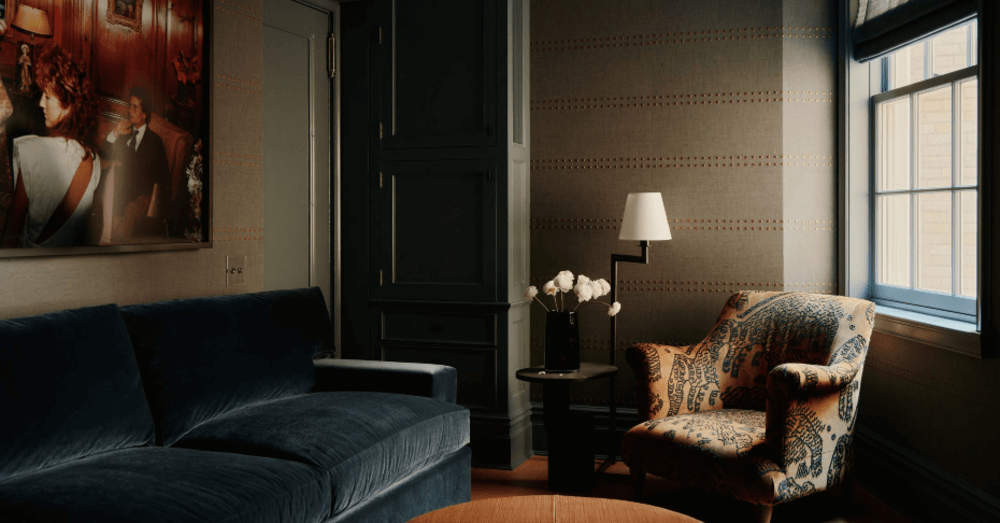
After years of all-white walls and bare-bones minimalism, darker colors are officially having their moment. Terracotta, chocolate brown, deep olive green, burgundy, and darker woods are showing up everywhere in 2026 interiors. But if you’ve ever stared at a paint swatch in “midnight forest” and thought, “My living room will look like a bat cave,” you’re not alone. That fear keeps a lot of people from trying the moody rooms trend, even when they love how it looks on Instagram. The good news? With a few smart moves, you can get all the coziness and drama of dark color without the gloom.
- Design experts say 2026 interiors are shifting away from sterile white minimalism toward spaces that feel warmer, darker, and more expressive, with moody atmosphere taking priority over brightness.
- Color drenching, the technique of painting entire rooms in one color including ceilings, walls, and trim, creates cocoon-like spaces that feel intentional and immersive.
- Many people shy away from dark colors because they think the result will feel claustrophobic, but even small spaces can benefit from a richer palette that adds warmth and visual weight.
Why Dark Colors Are Everywhere Right Now
If you’ve browsed any design publication lately, you’ve probably noticed a clear pattern. According to a designer trends survey taken by over 400 design professionals worldwide, brown is the top color designers anticipate using in 2026. About a third of participants chose it as their leading pick, a result that’s almost double what it was four years ago. That hunger for rich browns has been fueled by Pantone’s Mocha Mousse as its 2025 Color and Benjamin Moore’s 2026 pick, Silhouette, a charcoal-infused espresso.
Moody interiors are sticking around in 2026, but with warmth and restraint. As one designer put it, dark woods, softened blacks, charcoals, and deep earth tones are now shaping entire rooms and homes rather than appearing as single accent moments. These darker spaces act as a retreat, offering calm from everyday overstimulation.
Designers emphasize that saturated colors like burgundy, terracotta, chocolate, navy, and olive green are now in vogue, with homeowners using hues that create warmth and richness. WGSN, an international trend forecasting company, even named “Transformative Teal” the color of the year for 2026.
The Cave Fear Is Real, but Fixable
Many people are drawn to the cozy, dramatic charm of dark interiors but worry that drenching a space in dark paint will make it feel sad and gloomy instead of inviting. And that’s a reasonable concern! A room painted entirely in charcoal with no thoughtfulness behind it really can feel heavy. But the trick isn’t avoiding dark color. It’s knowing how to balance it.
Whenever you paint a room dark, don’t forget to address the trim, ceilings, doors, outlets, switches, and lighting. Everything in the room needs to work together, or the highest-contrast elements, like a white vent fan or bright ceiling light rim, will scream for attention in that moody, dark room. It’s a detail most DIY painters skip, and it makes a big difference.
Playing up contrast is also a must. Dark and moody can turn into a cave feel if you don’t add some lightness to the space. Light bedding with a dark throw, or a light area rug, brings brightness that helps the room breathe. Placing a large mirror opposite a window to reflect natural light makes a smaller space feel much bigger.
Techniques That Keep Things Warm, Not Gloomy
One of the biggest trends backing up this moody rooms movement is called color drenching. In a nutshell, color drenching is the art of using one single color across every surface: walls, ceiling, trim, and even furniture if you’re feeling adventurous. By removing contrast and visual breaks, you actually make a room feel more spacious, not less.
Successful color drenching relies on technique rather than excess. One approach uses a single paint color in varying finishes, such as matte walls paired with satin or semi-gloss trim. That variation in sheen gives the room visual texture and keeps it from reading as flat or heavy.
Always use warm-toned LED bulbs (2700K to 3000K) to create a candlelit glow that matches your moody interior. Cool-toned overhead lighting will fight your warm paint colors and drain the coziness right out of them. Layered lighting, with table lamps, sconces, and dimmers, gives you control over the mood throughout the day.
Don’t forget to add luminous accents like cushions, throws, books, and decor to soften the room. Metallic touches through aged brass lighting, sleek silver hardware, a mirrored table, or abstract art with gold brushstrokes all add shine to your dark room.
Start Small and Build Confidence
For 2026, designers are favoring dark paint for small rooms or those that aren’t the main living spaces, providing an unexpected sense of drama. Transitional spaces like foyers, powder rooms, and formal dining rooms are especially good candidates because they feel enveloping and considered.
Start small. Try a powder room, office, or hallway to build your color drenching confidence. The results will speak for themselves. A powder room costs very little in paint, requires less than a day of work, and gives you a contained space to test your comfort level. Once you see how rich and inviting a small moody room can feel, you’ll likely want to keep going.
Designer Jessica Hobson calls rich olive green her favorite living room color for 2026, saying it’s “interesting and soothing. It’s cozy in the winter and comes to life in the spring and fall. It also plays so well with so many colors.” That versatility is exactly what makes earthy dark tones so livable long term.
Ready to Go Dark? Pick Your Room and Commit
The biggest mistake people make with dark paint isn’t choosing the wrong shade. It’s going halfway. If you’re going to commit to a moody palette, fully commit. These deep, dark, warm hues are everywhere, and they can turn a room into a cozy, enveloping cocoon. Patch-testing a tiny square on your wall won’t tell you much. Paint a large section, including the trim, and live with it for a few days before judging.
Use warm-toned colors, textured fabrics, and proper lighting to warm your dark rooms. Bringing in natural elements like wood and plants also adds life to the design. Think leather chairs, linen curtains, velvet pillows, and a few well-placed candles. That’s how moody rooms go from “cave” to “I never want to leave this spot.”
